
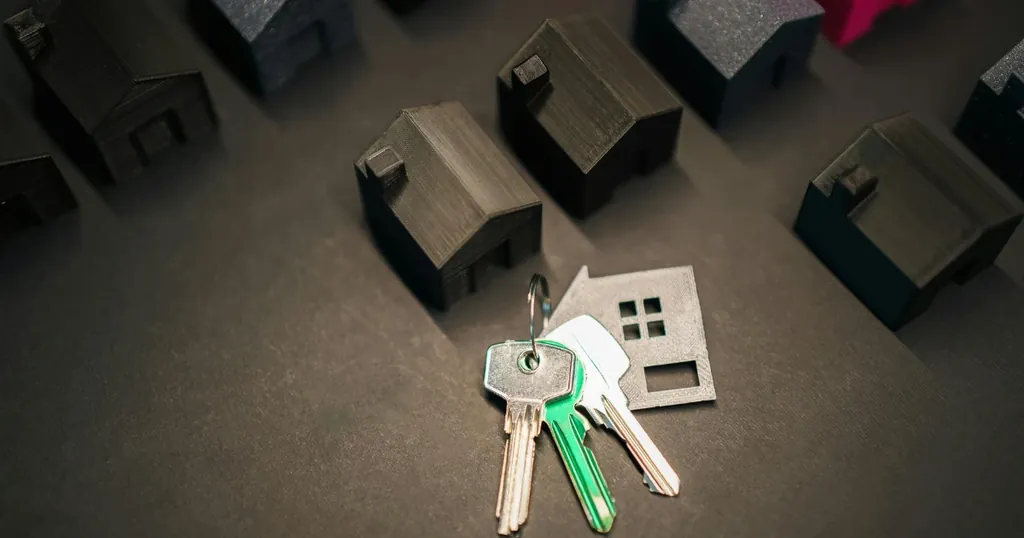
For years, investing in real estate was synonymous with large amounts of capital. That has changed. Digitalization, new financial models and tokenization have opened the door to investing in real estate with much more accessible amounts.
This article explains 4 real ways to invest in real estate with little money, including their advantages, risks and which one to choose based on your profile.
Can you invest in real estate with little money?
Yes. Today there are models that let you start with $50 to $1,000 USD, depending on the platform or strategy.
The key is understanding that you no longer need to buy an entire property. You can:
- Invest fractionally
- Participate in projects
- Gain indirect exposure to the real estate market
1. Real estate crowdfunding
Crowdfunding lets you invest in real estate projects alongside other investors.
How does it work?
A platform lists a project (for example, a building or a development). You invest a small amount and receive returns when the project generates income or is sold.
Advantages
- Low entry point (from $100 USD)
- Professional management
- Easy diversification
Disadvantages
- Low liquidity (your money is locked up)
- Dependence on the developer
Ideal for
Beginners who want exposure to the sector without technical complications.
2. FIBRAs (Mexico's REITs)
FIBRAs are publicly traded trusts that own real estate assets (shopping centers, offices, hotels, etc.).
How does it work?
You buy certificates on the stock exchange (as if they were shares) and receive income from rents.
Advantages
- High liquidity (you can sell whenever you want)
- Investment from small amounts
- Clear regulation
Disadvantages
- Exposure to market volatility
- Less control over the assets
Ideal for
Investors seeking passive income with easy entry and exit.
3. Real estate tokenization (digital shares)
Tokenization divides a property into multiple digital parts called tokens.
How does it work?
You buy a fraction of the property through digital shares (tokens) recorded in a digital ledger. You can receive rental income and, in some cases, sell your stake on secondary markets.
Advantages
- Investment from very small amounts
- Potential liquidity (secondary markets)
- Greater transparency
- Global access
Disadvantages
- Regulation still evolving
- Requires understanding basic technology
Ideal for
Investors looking for innovation, liquidity and borderless access.

4. Pre-construction real estate (early-stage investing)
This means investing in properties that are under construction or in pre-sale.
How does it work?
You buy at a lower price before the project is finished, expecting its value to rise.
Advantages
- High potential appreciation
- Deferred payments (you don't need all the capital up front)
Disadvantages
- Developer risk
- Long waiting period
- Lower liquidity
Ideal for
People who can wait and want to maximize their return.
Quick comparison
| Method | Minimum investment | Liquidity | Risk | Type of return |
|---|---|---|---|---|
| Crowdfunding | Low | Low | Medium | Rent / sale |
| FIBRAs | Very low | High | Medium | Dividends |
| Tokenization | Very low | Medium-high | Variable | Rent + sale of shares |
| Pre-construction | Medium | Low | High | Appreciation |
Which option is best?
It depends on your goal:
- Stable passive income: FIBRAs
- Hassle-free diversification: crowdfunding
- Innovation and liquidity: tokenization
- Higher return (with more risk): pre-construction
Recommended strategy (a smart approach)
Instead of choosing just one option, a stronger strategy is to combine:
- FIBRAs (steady cash flow)
- Crowdfunding (exposure to projects)
- Tokenization (growth and future liquidity)
This lets you balance risk, return and flexibility.
Conclusion
Investing in real estate with little money is no longer a limitation but an opportunity. The key is choosing the right model for your profile and investment horizon.
The trend is clear: access to real estate will become increasingly digital, fractional and global.
Informational content only; it does not constitute tax or financial advice.