
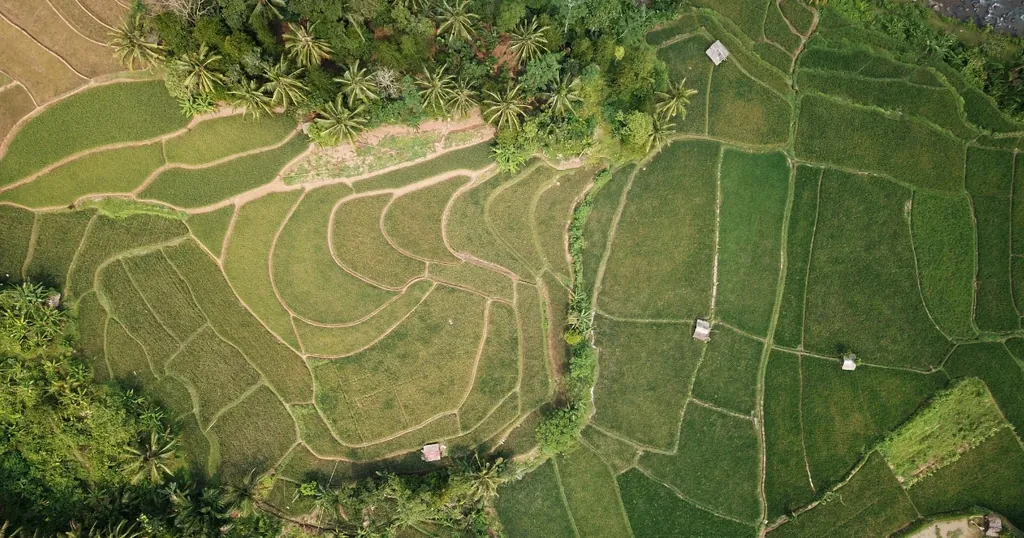
Buying land in Mexico from the United States is entirely possible, even if you are not a Mexican citizen.
However, the process has legal, tax and operational particulars you need to understand to avoid risks.
This guide walks you step by step through doing it correctly, especially if you are investing from abroad.
Can a foreigner buy land in Mexico?
Yes, but it depends on the location.
There are two scenarios:
1. Restricted zone (coastlines and borders)
- Within 50 km of beaches
- Within 100 km of borders
You cannot buy directly in your own name.
You must use:
- A bank trust (Mexican fideicomiso)
2. Outside the restricted zone
- You can buy directly
- The deed is in your name, with no intermediaries
Step-by-step guide to buying land in Mexico from the USA
1. Define the type of land
Not all land is the same.
You should check:
- Zoning / land use (residential, agricultural, commercial)
- Access to utilities (water, electricity, sewage)
- Legal status (ejido vs. private property)
Avoid ejido land if you are inexperienced: it is not private property until it has been regularized.
2. Verify the land’s legal status
This is where most problems originate.
Request:
- The public deed (escritura pública)
- A certificate of no liens (certificado de libertad de gravamen)
- The ownership history
Everything should be validated by a Mexican notary public.
3. Choose the legal structure (key step)
Option A: direct purchase (outside the restricted zone)
- Simpler
- Lower cost
Option B: bank trust (restricted zone)
- The bank acts as the legal title holder
- You are the beneficiary
Typical cost:
- Setup: $1,000 – $2,000 USD
- Annual maintenance: $500 – $800 USD
It is the standard route for foreigners.
4. Sign the purchase promise agreement
This is the initial contract in which:
- The price is agreed
- The deposit is set (5% – 10%)
- The conditions are defined
This is where you can include protective clauses.
5. Transfer the money from the USA
Common options:
- International wire transfer
- Cross-border payment platforms
- Structured transfers for investment
Keep in mind:
- The exchange rate
- Bank fees
- Tax compliance
6. Sign before a notary public
The notary in Mexico:
- Verifies the legality
- Calculates the taxes
- Formalizes the transaction
In Mexico, the notary plays a much stronger role than in the USA.
7. Pay taxes and closing costs
Typical costs:
- Acquisition tax: 2% – 4%
- Notary: 1% – 2%
- Public registry: variable
Estimated total: 4% – 8% of the land value
8. Register the property
The notary takes care of:
- Recording the deed
- Ensuring the land is legally in your name (or the trust’s)
Illustrative cost example
Land purchase: $100,000 USD
| Item | Cost |
|---|---|
| Taxes | $3,000 |
| Notary | $1,500 |
| Registry | $500 |
| Bank trust (if applicable) | $1,500 |
| Total additional cost | ~$6,500 USD (6.5%) |
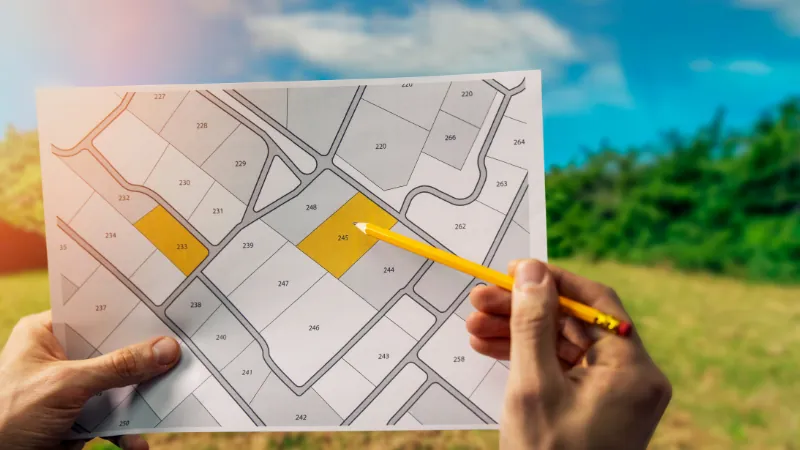
Common risks (and how to avoid them)
❌ Buying unregularized ejido land
✔️ Solution: require a property title.
❌ Not checking for liens
✔️ Solution: an official certificate.
❌ Inheritance disputes
✔️ Solution: review the chain of title.
❌ Being overcharged as a foreigner
✔️ Solution: an independent appraisal.
Advanced strategy (investor level)
If you are buying as an investor:
- Buy in areas with tourism or urban development
- Analyze projected appreciation (5–10 years)
- Consider tokenization or fractional structures
This is key if you are building an international real estate portfolio.
Conclusion
Buying land in Mexico from the USA is a clear process if you follow the right structure:
- Validate the land
- Choose the legal structure
- Sign the contract
- Transfer the funds
- Close the deed with a notary
The critical point is not buying… it is buying with the right legal structure.
For informational purposes only; this is not tax or financial advice.